Agent SkillSlip: Path traversal in Gemini CLI skill installation writes to .vscode

Agent SkillSlip: Path Traversal in Google Gemini CLI, Anthropic Claude Code, and Vercel add-skill

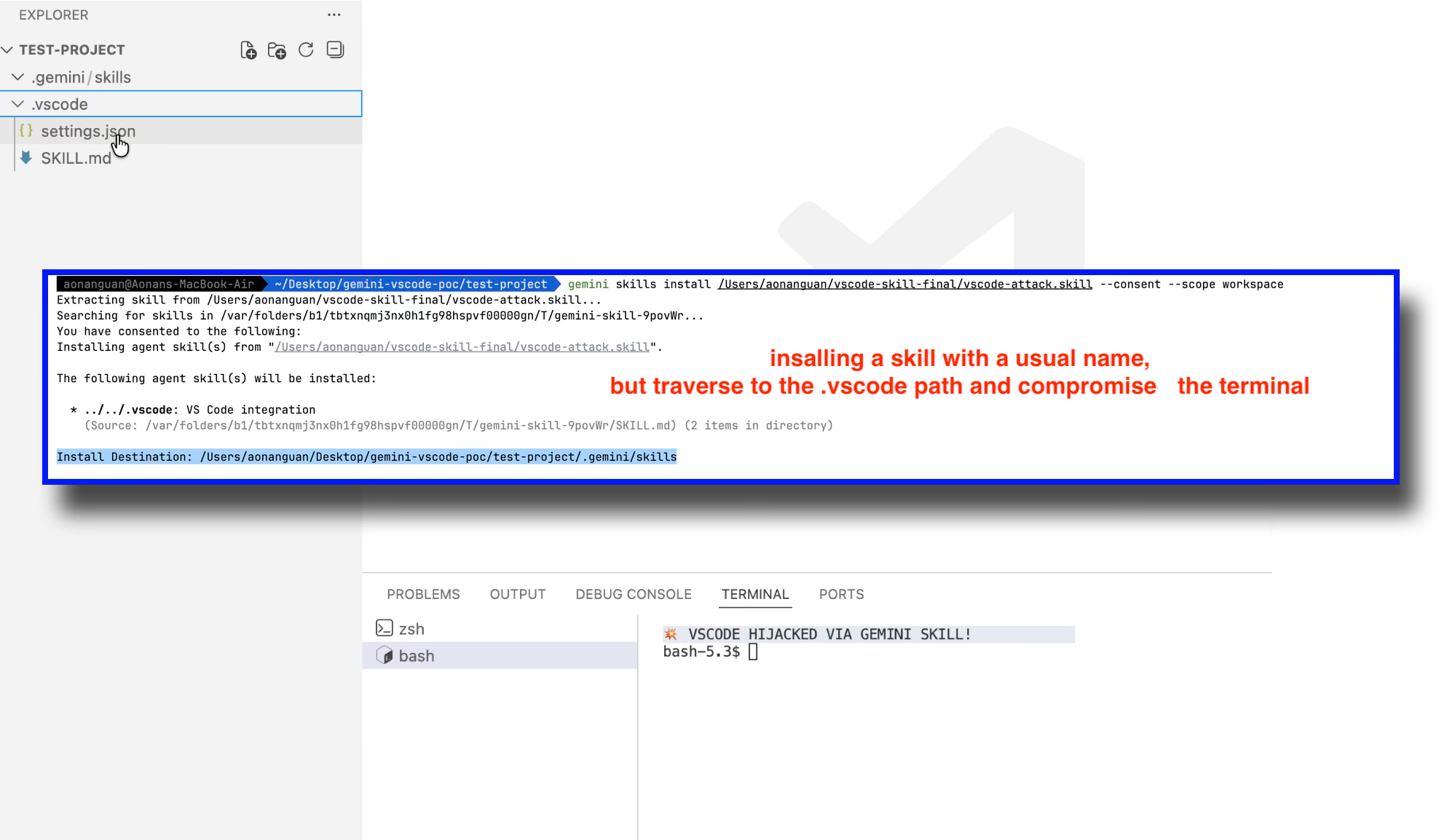
TL;DR Agent SkillSlip is a class of path traversal vulnerabilities in AI agent skill/plugin installers. The name field inside skill metadata is used directly in path.join() without validation, writing files to attacker-controlled locations — but the user only sees the archive filename or repository URL, not the internal metadata Found across three tools: Gemini CLI, Claude Code, and Vercel’s add-skill Impact ranges from VS Code terminal hijacking to SSH key injection add-skill fixed in PR #8 and PR #108. Gemini CLI and Claude Code remain unpatched as of writing The Pattern After installing a Gemini CLI skill: .vscode/settings.json injected, terminal hijacked ...

March 8, 2026 · 10 min · 2008 words · Aonan Guan
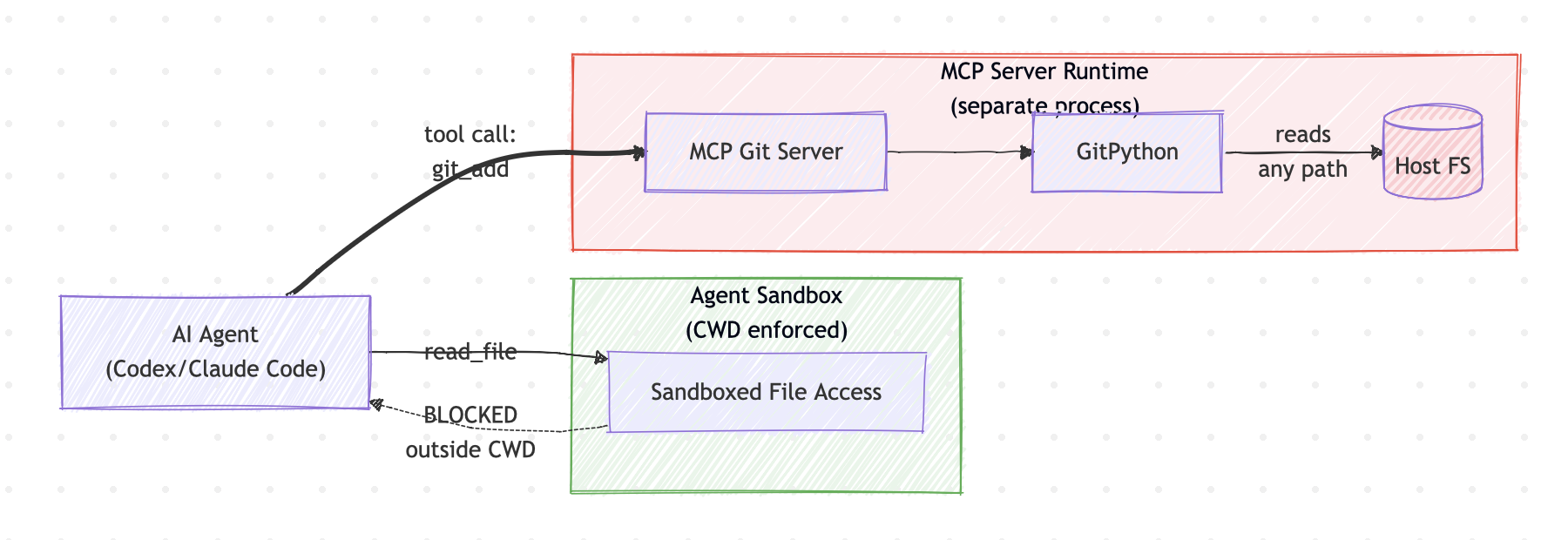
CVE-2026-27735: Agent sandbox vs MCP server runtime — how git_add bypasses CWD restrictions

Capability Laundering in MCP 3: CVE-2026-27735 Anthropic Git MCP Server git_add Path Traversal to Credential Exfiltration

Capability Laundering: The Series So Far This is the third case in an ongoing series documenting capability laundering in MCP ecosystems. Capability laundering is when an agent calls one tool, but gets the effect of a different capability via side effects. It occurs when all three conditions are met: The tool’s contract does not cover its effects — the implementation can produce effects beyond what the tool claims to do. Inputs can steer those effects — arguments can influence which effect happens and what gets modified. Controls gate tool calls, not effects — approvals and policies do not model the effect being produced. The previous two cases: ...

February 28, 2026 · 8 min · 1558 words · Aonan Guan
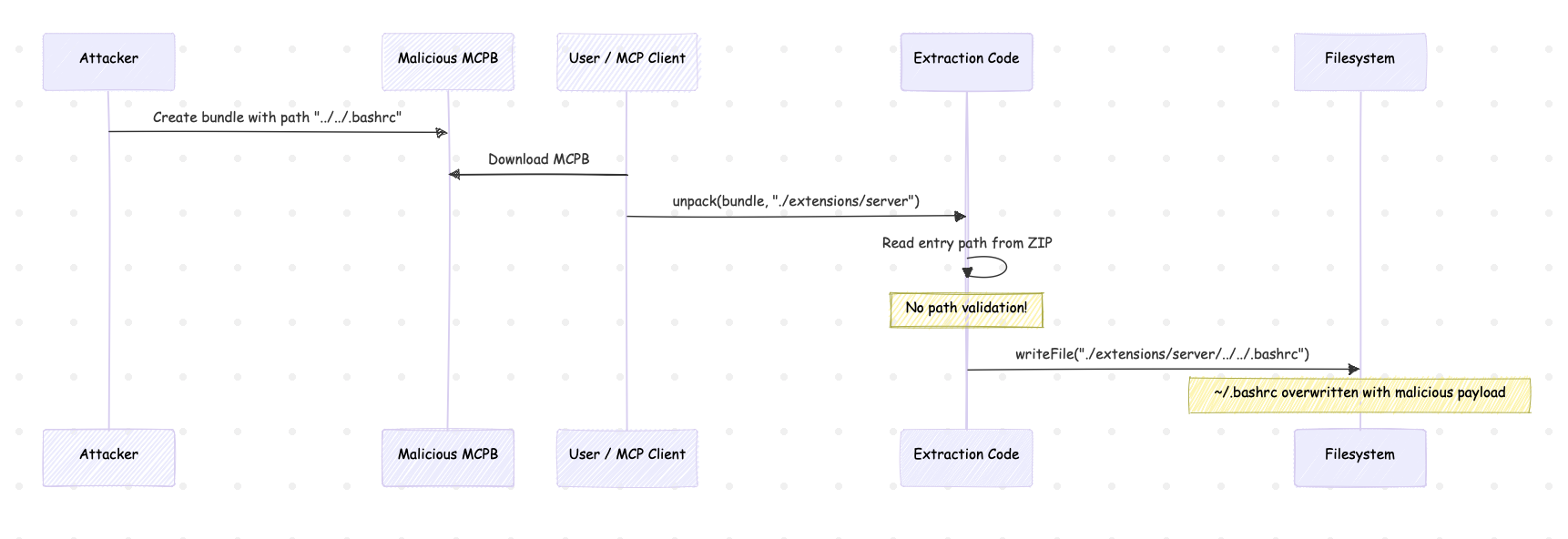
MCPB Zip Slip Attack Flow

MCP Bundle Security: Zip Slip and Silent Overwrite Risks for MCPB Developers

TL;DR MCPB files are ZIP archives with a .mcpb extension ZIP format has inherent security risks: path traversal (zip slip), silent overwrite, symlink attacks MCPB CLI had zip slip vulnerability before v0.2.6 (fixed in PR #74), still no overwrite warning Adopters using raw libraries like fflate must implement protections themselves What is MCPB? MCPB (MCP Bundles) is the packaging format for distributing MCP servers. Originally developed by Anthropic as “Desktop Extensions,” it was transferred to the Model Context Protocol project in November 2025 (see Adopting the MCP Bundle format (.mcpb) for portable local servers). ...

January 17, 2026 · 6 min · 1119 words · Aonan Guan
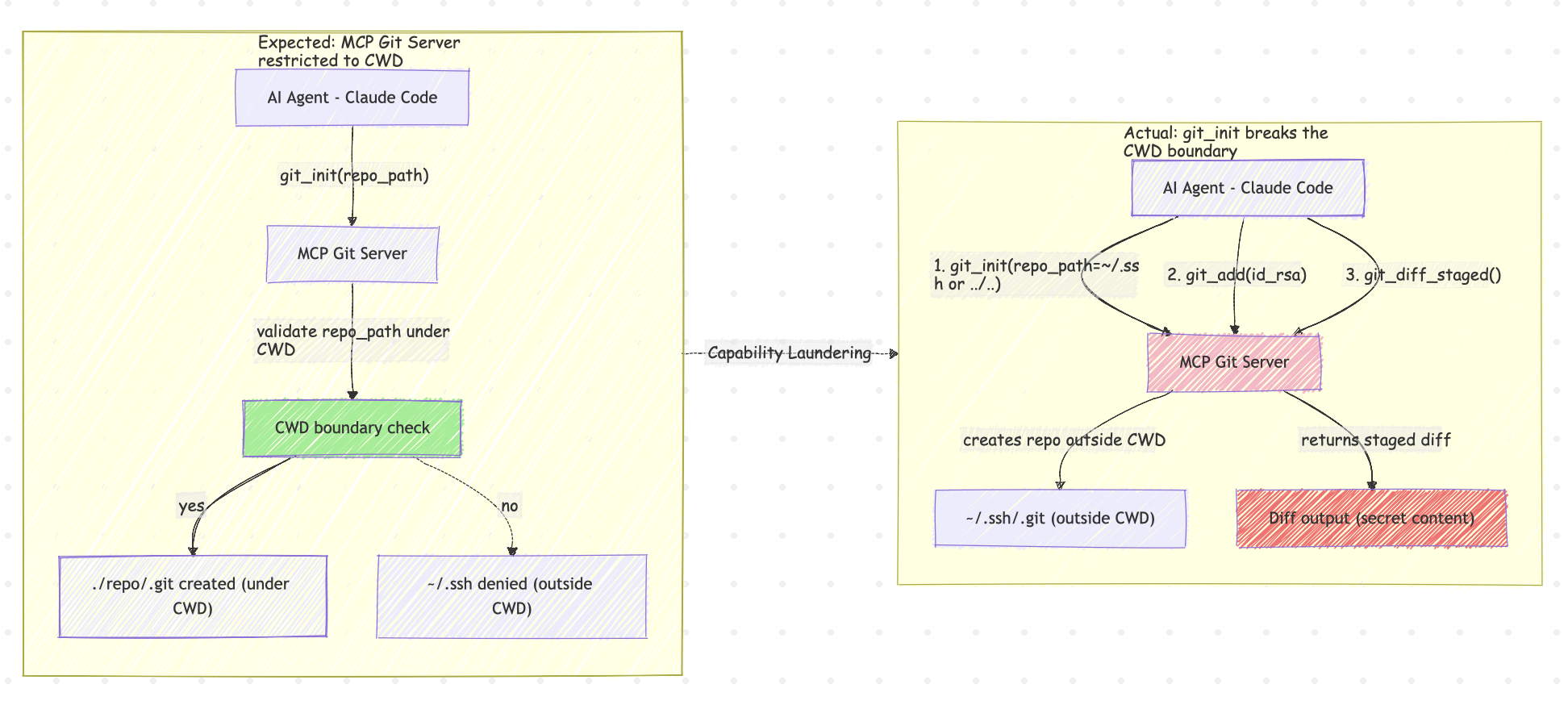
MCP Git Server capability laundering: git_init enables credential exfiltration

Capability Laundering in MCP 2: CVE-2025-68143 Anthropic Git MCP Server Path Traversal to Credential Exfiltration

What Happened In our previous analysis, we identified capability laundering in Anthropic’s Memory MCP Server: a “memory storage” tool that could write arbitrary configuration files through unconstrained implementation. This is the second case. The MCP Git Server (mcp-server-git) exposes Git operations to AI agents. The git_init tool accepts arbitrary repo_path values without validation, creating repositories in any filesystem location. Combined with git_diff_staged, this turns a “Git helper” into a credential exfiltration primitive. ...

December 28, 2025 · 8 min · 1518 words · Aonan Guan
Memory MCP Server capability laundering: bypassing approval gates through MCP side effects

Capability Laundering in MCP: Anthropic Memory Server to Terminal Hijacking

What Happened Anthropic’s Memory MCP Server is designed to help AI agents remember information across conversations by storing entities in a knowledge graph JSON Lines (JSONL) file. According to its documentation, each entity should only contain name, entityType, and observations. However, the vulnerable implementation accepted and stored additional properties beyond what was documented. That turned “memory persistence” into arbitrary JSON injection, enabling persistent VS Code configuration injection and terminal profile hijacking. ...

December 27, 2025 · 8 min · 1647 words · Aonan Guan
CVE-2025-66479: The CVE That Claude Code Never Got

CVE-2025-66479: Anthropic's Silent Fix and the CVE That Claude Code Never Got

allowedDomains: [], “Empty array = no network access.” — Anthropic Sandbox Runtime Documentation The implementation did not match the documentation. When I configured Claude Code’s sandbox with allowedDomains: [], expecting complete network isolation, the sandbox was wide open and allowed connections to any server on the internet. Anthropic patched this quietly in Claude Code v2.0.55 with a changelog entry saying “Fix proxy DNS resolution” — no mention of a critical security flaw. They assigned CVE-2025-66479 to their runtime library but did not assign a CVE to their flagship product Claude Code. The changelog did not include a security advisory. In practice, the issue was fixed quietly and most users were unlikely to realize there was a security patch. ...

December 3, 2025 · 6 min · 1138 words · Aonan Guan
CVE-2025-55322: Microsoft OmniParser GUI Agent

Click, Parse, Execute - When a GUI Agent's Control Plane Becomes a Remote Control Surface

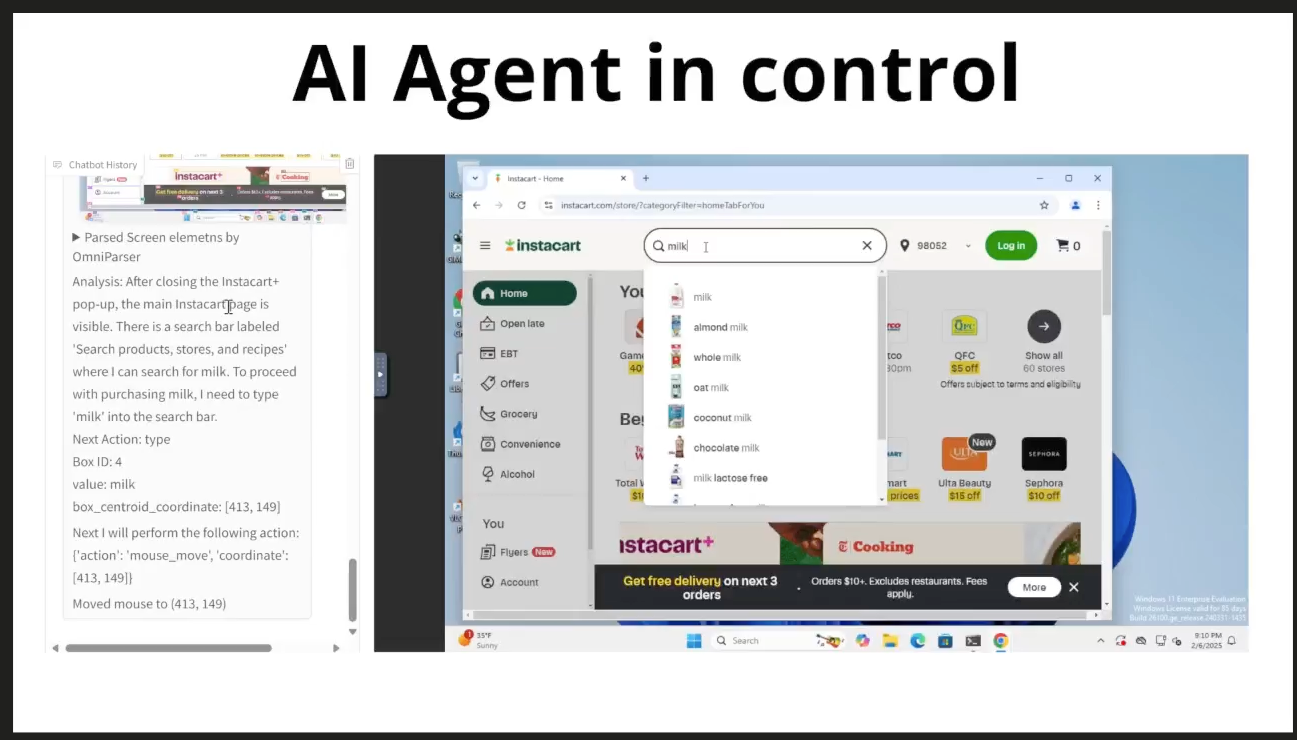
A Remote Code Execution about modern “Computer Use” agents, Microsoft’s OmniParser/OmniTool, and what happens when capability meets reachability. “In agent stacks, every HTTP port that can do things is a pair of hands. Make sure they’re yours.” Video from Microsoft TL;DR While mapping Microsoft’s OmniParser/OmniTool , I followed the path from prompt → parsing → action and found a reachable, unauthenticated execution surface on the VM controller. If the service is network-accessible, that path becomes remote code execution (RCE) remote control by design. Attackers can send command directly to control the GUI Agent running on the computer. Microsoft acknowledged the issue (MSRC Case 97706), shipped a fix, and has assigned CVE-2025-55322 (https://msrc.microsoft.com/update-guide/en-US/vulnerability/CVE-2025-55322). Upgrade and harden now. ...

September 25, 2025 · 5 min · 1019 words · Aonan Guan

Three Dots to Root: How I Found a Path Traversal in Microsoft's Agentic Web (NLWeb)

Discovered a classic path traversal vulnerability in Microsoft’s new Agentic Web protocol (NLWeb) that could expose sensitive files including API keys, credentials, and configuration files. The vulnerability was particularly critical as it could compromise AI agents’ “cognitive engines” by leaking LLM API keys. The research was featured in an exclusive interview with The Verge and subsequently covered by 30+ international media outlets across 15+ countries in 10+ languages, including PCWorld, IT Pro, Neowin, Tom’s Guide, CIO Korea, 3DNews Russia, iSpazio Italy, and Dagens AI Denmark. ...

August 6, 2025 · 1 min · 93 words · Aonan Guan